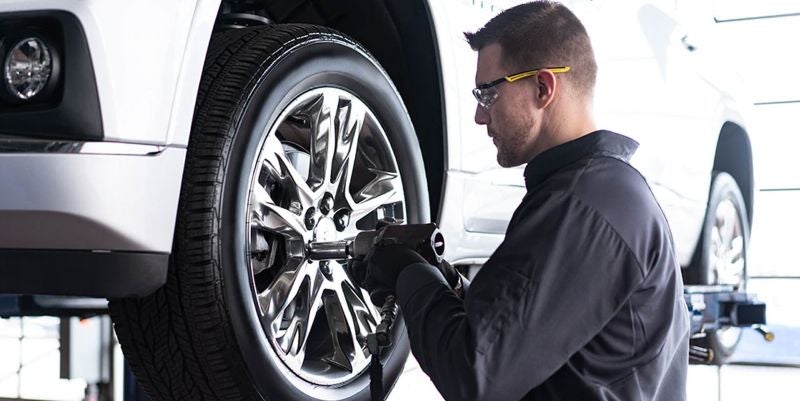
From a Trax to a Silverado HD, choosing Chevrolet tires that match the vehicle's specifications and maintaining them correctly can affect handling, ride quality, fuel efficiency, and tire life.
The Vehicle Determines What the Tire Needs to Do
A tire designed for one Chevrolet may be a poor fit for another because the demands change dramatically across the lineup. A Silverado HD can carry loads and perform work that places very different demands on its tires than a compact Trax or Trailblazer.
Tire size, construction, load capability, and other specifications need to correspond with the vehicle. Installing tires that do not meet those requirements can affect handling, efficiency, and wear. The tire is not an accessory hanging off the wheel. It is a working component of the chassis.
Different Jobs Call for Different Tire Types
All-season tires can suit Chevrolet SUVs such as the Equinox or Blazer when the vehicle spends its time on regular roads in appropriate conditions. A Corvette Stingray or Corvette Z06 places greater emphasis on grip and steering response, making performance-focused tires part of the equation.
Colorado and Silverado drivers who routinely leave pavement may consider all-terrain or off-road tires designed for those environments. Choosing among them starts with how the Chevrolet is driven. Aggressive tread that earns its keep on rough terrain may provide little benefit to a vehicle that never leaves pavement.
Your Tires Leave Evidence as They Wear
Tread condition can reveal quite a bit about what is happening at each corner of the vehicle. Uneven wear may point toward an alignment or suspension concern, while vibration at highway speeds can indicate a tire or wheel issue that deserves inspection. Sidewall bulges and repeated pressure loss are additional warning signs. The penny test provides a simple tread check: insert a penny into a tread groove with Lincoln's head facing downward. If the top of his head remains visible, the tire has reached the point where replacement should be considered.
Rotation, Pressure, and Alignment All Affect Tire Life
Tire maintenance involves more than waiting for the tread to disappear. Regular tire rotations help distribute wear, while pressure checks keep each tire operating at the appropriate inflation level.
Wheel alignment also affects how the tread meets the pavement. A Chevrolet pulling to one side or wearing tires unevenly may need alignment service or further inspection. Including tire service with scheduled maintenance gives a technician an opportunity to catch abnormal wear before an otherwise serviceable set of tires is chewed into retirement.
The Hardware Around the Tire Matters Too
Valve stems, wheel hardware, and tire pressure monitoring system components all contribute to proper tire operation. Chevrolet's TPMS provides pressure information that can alert the driver when inflation drops. If a sensor fails or develops a problem, that information may no longer be available as intended. Genuine GM parts can be used when compatible TPMS sensors, valve components, or related wheel hardware require replacement, keeping those components matched to the Chevrolet application.
Schedule Chevy Tire Service Near Cut Off, LA
Drivers around Cut Off, LA, can bring their Chevrolet to Golden Motors for tire rotations, pressure checks, wheel alignment, inspections, and replacement tire needs. The service team can examine tread wear and help identify Chevrolet tires appropriate for the specific model, trim, and driving demands.
Schedule Chevy service when your tires show abnormal wear, vibration, pressure problems, or simply reach their next maintenance interval, because the only parts touching the road deserve more attention than they usually receive.